 Dhaval G.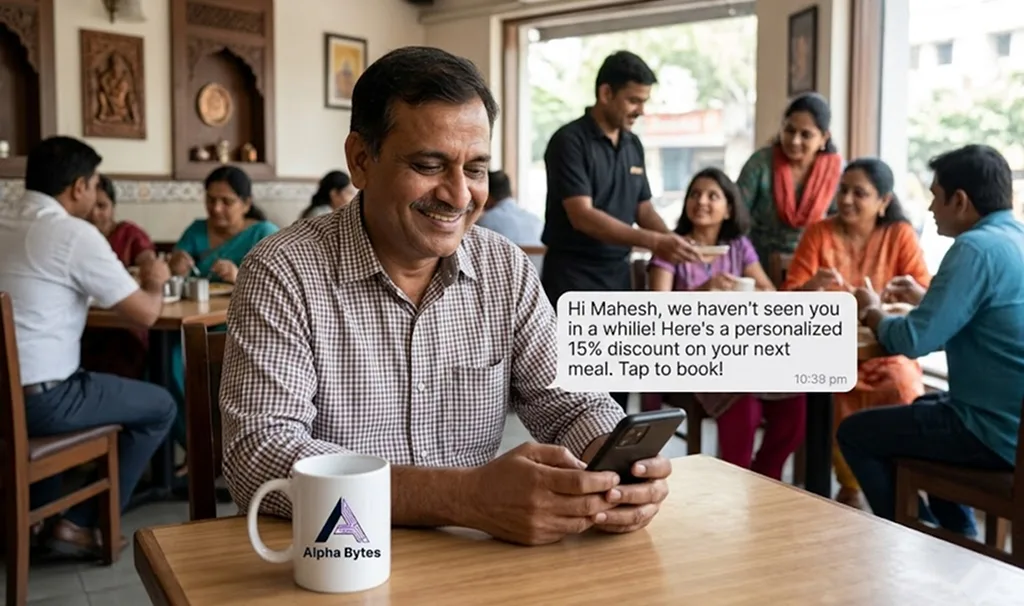
A restaurant owner in Surat once told us his biggest frustration: "We have hundreds of customers who visited once and loved it. I just have no way to bring them back." He wasn't wrong. His food was excellent. His reviews were great. But once a customer walked out the door, there was no system no follow-up, no reminder, no reason to return until they happened to think of him again. His competitor down the road, meanwhile, was sending personalized birthday offers, triggering WhatsApp messages when a customer hadn't visited in 30 days, and automatically requesting reviews three hours after every meal. Same product quality. One had repeat customers. One didn't.
Here's the number that should make every business owner sit up: increasing customer retention by just 5% can increase profits between 25% and 95%. That isn't a marketing claim it's a decade-old finding from Harvard Business Review that has only become more accurate as customer acquisition costs have risen. Getting a new customer now costs five to seven times more than keeping an existing one. And yet most small businesses invest almost everything into acquisition and almost nothing into retention. In 2026, AI makes building a customer retention system genuinely accessible without an enterprise budget, without a tech team, and without complex software. This guide covers exactly what an AI customer journey looks like for a small business, which stages matter most, and the specific tools and actions that build a system your customers move through automatically.
What Is an AI Customer Journey and Why Does It Matter for Small Business?
A customer journey is the full sequence of experiences a person has with your business from the moment they first hear about you, through their first purchase, to whether they come back and tell others. Most small businesses manage each stage separately and reactively. An AI customer journey automates the connections between those stages so that completing one step automatically triggers the right action at the next.
Think of it like a well-trained member of staff who never forgets anything. They remember every customer's name and last visit. They follow up without being asked. They notice when a loyal customer hasn't returned and send a personal message. They request a review at exactly the right moment. An AI customer journey is that staff member available 24 hours a day, consistent every time, and free from the human tendency to forget the follow-up when things get busy.
The Five Stages Every Customer Goes Through
Every customer, regardless of your industry, passes through five stages before becoming a loyal repeat buyer:
- Awareness: they find out your business exists
- First impression: they visit your website or profile and decide whether to enquire
- Conversion: they make first contact and become a paying customer
- Experience: they receive your service and form an opinion
- Return and referral: they decide whether to come back and tell others
Most businesses only have systems for stages one and three getting found and making the sale. AI helps you build intentional, automated touchpoints at every stage, especially the ones after the sale where most businesses go completely silent and where loyalty is actually built or lost.
Stage 1 Awareness: Getting Found By the Right People
You can't build a customer journey with someone who has never heard of you. So before building the retention system, your visibility foundation needs to be solid. In 2026 this means being found on Google, on Google Business Profile, and increasingly inside AI tools like ChatGPT and Perplexity when potential customers ask for recommendations.
We've covered the full strategy for this in our guide on how to get clients online without paid ads but the relevant point here is this: awareness is only the first step. Every business that works hard on visibility and then has no customer journey after the first visit is filling a bucket with a hole in the bottom.
The AI element at this stage is relatively light. Tools like Google Business Profile posting schedulers, AI-assisted social content creation, and automated review monitoring help maintain visibility without requiring daily manual effort. The real AI leverage happens from stage two onwards.
Stage 2 First Impression: Turning a Visitor Into an Enquiry
When someone finds your business through Google, a referral, social media, or an AI recommendation the first thing they do is check you out. They visit your website. They look at your Google reviews. They scroll your Instagram. What they find in the next 90 seconds determines whether they contact you or move to the next option on the list.
Your Website Is a 24-Hour Salesperson
In 2026, your website is the most important sales tool your business has and most websites are failing at this job silently. Thousands of visitors arrive, can't immediately understand what the business does or who it helps, and leave. No bounce rate report tells you how much that's costing in lost customers. We've broken this down in full in our guide on why your website isn't generating leads the nine specific reasons with precise fixes for each.
The AI addition at this stage that makes the biggest immediate difference is a smart chatbot that engages visitors who are hesitating. Not a rigid FAQ bot an AI-powered assistant that can answer real questions conversationally, qualify whether the visitor is a good fit, and either book an appointment or capture their details for follow-up. Conversational AI chatbots can handle up to 80% of routine customer queries, freeing your team to focus on enquiries that genuinely need a human response. The visitors who are on your website at 11pm on a Sunday are currently leaving without contact. An AI chatbot captures them.
Stage 3 Conversion: The Follow-Up That Actually Closes
Someone has made enquiry. They've filled out your form, sent a WhatsApp message, or called. What happens in the next two hours determines whether that enquiry converts into a customer or quietly disappears.
Research is consistent on this: responding to an enquiry within five minutes makes a customer nine times more likely to engage than waiting 30 minutes. Most small businesses respond in hours, not minutes not because they don't care, but because they were with another customer, in a meeting, or simply didn't see the message arrive.
The Automated Response That Keeps Warm Leads Warm
The highest-ROI automation most small businesses don't have: an instant, personalized response to every enquiry that goes out the moment the form is submitted or the WhatsApp message is received. Not a generic "thanks for your message." A personalized acknowledgement that references what they enquired about, tells them exactly when to expect a human response, and includes one piece of useful information that demonstrates your expertise before they've spoken to anyone.
We build these for clients using n8n and Make.com the same platforms covered in our guide on how to automate your business with AI. The setup takes a few hours. The impact on conversion how many enquiries turn into paying customers is typically 30–50% improvement within the first 60 days.
Automated Proposals and Booking
For businesses where the next step after enquiry is a proposal or a booking, AI tools now generate first-draft proposals from a brief set of notes in under five minutes, and booking systems can automatically offer available slots and confirm appointments without a human being involved in the scheduling at all. This doesn't just save time it speeds up the customer's journey through the funnel, reducing the window where they might decide to try someone else who responds faster.
Stage 4 Experience: The AI Touches During the Service That Build Loyalty
Most business owners think loyalty is built through the quality of the core service. Quality matters but loyalty is built in the gaps. The moments between the purchase and the delivery. The communication during the service period. The small, unexpected demonstrations that you remembered something the customer told you and acted on it.
During-Service Communication That Feels Personal
For businesses with a service delivery period a web project, a construction job, a healthcare treatment programmed, a legal matter the experience stage is where most clients either develop strong loyalty or begin to feel undervalued. The pattern we see repeatedly in businesses with low repeat rates is silence during delivery. The client is updated when something goes wrong or when a milestone is reached. Otherwise, they hear nothing.
AI-powered CRM tools can trigger automated progress updates at defined intervals without your team having to remember to send them. A client who receives a "Week 2 update: here's where we are and what's coming next" message is far less likely to feel uncertain about the project and far more likely to return for future work. The update is templated and triggered automatically. Your team reviews and sends. The client experiences attentiveness they rarely receive from other providers.
Personalization That Stands Out
87% of people find AI-powered brand experiences valuable, according to the 2026 Personalization Trends Report but most small businesses deliver the same experience to every customer regardless of what they know about them. A client who mentioned they have a specific deadline. A patient who said they prefer morning appointments. A customer who mentioned they're buying something as a gift. These details, captured in a simple CRM and referenced in future communications, transform the experience from transactional to genuinely personal.
For businesses with websites, AI-driven personalization takes this further showing returning visitors content and offers relevant to their history with you, rather than the same homepage every new visitor sees. A returning customer who feels recognized on your website is significantly more likely to book again than one who arrives to an anonymous experience.
Stage 5 Return and Referral: Where the Real Profit Is
This is the stage most businesses have no system for at all. The sale is complete. The service is delivered. The customer is satisfied. And then nothing. No follow-up. No request for a review. No gentle reminder when it might be time to return. No invitation to refer a friend. The customer might come back. They might not. It's entirely up to chance.
The Automated Retention Sequence
The single highest-ROI addition most small businesses can make to their customer journey is an automated post-purchase or post-service sequence. A simple three-message sequence delivered over 14 days after a service is completed consistently outperforms any individual marketing tactic:
- Day 1 Thank you and outcome confirmation. A personalized message confirming the service is complete, thanking them specifically, and summarizing what was delivered. Sent automatically from your CRM.
- Day 5 Value-add message. A useful piece of content relevant to their purchase a care guide, a recommended next step, a relevant tip. This positions you as a helpful partner, not just a service provider who took their money.
- Day 14 Review request. A direct, warm request for a Google review, sent at the moment they're most likely to be satisfied and least likely to be too busy. This is the moment that builds your online reputation and feeds the top of the funnel for the next cycle of new customers.
After 30 days with no return visit or purchase, a re-engagement message goes out: "We haven't seen you in a while here's something we thought you'd find useful / here's a reason to come back." For the restaurant owner from our opening this single automation, sending a message at 30 days of inactivity, recovered an average of 15% of lapsed customers in the first month of operation.
The Referral System That Runs Itself
Most referrals happen because someone was delighted enough to mention your business unprompted. But most potential referrers need a gentle nudge not because they don't want to help you, but because it didn't occur to them at the right moment. The automated referral request sent at day 10 or day 14 when satisfaction is highest captures referrals that would otherwise never happen.
The message is simple: "If you know anyone who'd benefit from [specific description of what you do], we'd genuinely appreciate an introduction. Here's a sentence you can share with them: [brief, specific description of your best service for their network]." Remove the work from the person making the referral. Most will do it if it's easy.
Building This Without a Tech Team
The honest question: can a business owner with no technical background actually build this? Yes but not all at once, and not by trying to implement everything in this guide in week one.
The Right Sequence for Getting Started
- Week 1: Set up a simple CRM. Zoho CRM's free tier, HubSpot's free plan, or even a well-structured Google Sheet with automation via Make.com handles the data foundation for everything else.
- Week 2: Build the post-service sequence. Three messages, automated. This produces the fastest visible ROI of any step in this guide because it immediately improves retention from existing customers.
- Week 3: Set up the enquiry auto-response. Instant acknowledgement, 24-hour follow-up, and a 72-hour "did you have a chance to look at this?" message.
- Month 2: Add the chatbot to your website for after-hours enquiry capture.
- Month 3: Review what's working from the data and expand the touchpoints that performed best.
The AI agents that handle these automated workflows the sequence sending, the chatbot responding, the CRM updating are not complex to configure on platforms like n8n, Tidio, or Make.com. For most small businesses, a developer-free setup handles the majority of what this guide describes. More complex implementations custom integrations with booking systems, industry-specific CRMs, WhatsApp Business API are where an agency adds genuine value.
What We've Seen Work Real Alpha Bytes Client Outcomes
We've helped businesses across healthcare, retail, and professional services implement elements of the AI customer journey described in this guide. The results we see most consistently are:
- Healthcare clinics with an automated review request at 24 hours post-appointment going from 8 Google reviews to 60+ in three months without ever asking a single patient manually
- Service businesses with an enquiry auto-response reducing their average lead-response time from 4 hours to under 2 minutes and seeing close rates improve by 40% as a result
- Retailers with a 30-day re-engagement message recovering 12–18% of lapsed customers every month on full-price purchases, with zero ad spend involved
- Consultants with a post-project follow-up sequence generating referral enquiries from existing clients at a rate of one referral per 3.5 clients compared to one per 12 before the system was in place
None of these businesses had dedicated marketing teams. None of them spent money on advertising to achieve these results. They built a system that ran while they focused on the work.
Key Takeaways
Here's everything that matters from this guide:
- Increasing customer retention by just 5% can increase profits by 25–95% retention is the highest-ROI investment available to most small businesses in 2026
- An AI customer journey automates the touchpoints between stages so the right message reaches the right customer at the right moment without manual effort
- The five stages awareness, first impression, conversion, experience, return and referral each need a specific, intentional system, not just the first two
- The highest-ROI automation for most businesses is the post-service three-message sequence: thank you, value-add, review request
- Start with one stage, build the automation, measure the result, and expand don't try to implement all five stages simultaneously
- Customers who receive personalized, timely follow-up are significantly more likely to return and refer and most businesses have no system to deliver either
Final Thoughts
The most common conversation we have with business owners who are frustrated by slow growth is this: they're working harder, spending more on ads, and still feeling like they're losing ground. When we look at their customer data, the pattern is almost always the same strong acquisition, weak retention. Customers come in once, have a good experience, and then simply drift away because nothing in the business was designed to bring them back.
Building an AI customer journey doesn't require a big budget, a tech team, or a complete overhaul of how you operate. It requires identifying the specific moments after the sale where a well-timed, personalized touchpoint would change what a customer does next and then automating that touchpoint so it happens every time, for every customer, without anyone needing to remember to do it.
If you want to see what a complete AI-powered business system looks like across your website, automation, content, and customer journey, our complete AI and web guide for business owners covers every layer in one place. And if you want to talk through what an AI customer journey would look like for your specific business your industry, your current tools, your customer patterns reach out to Alpha Bytes directly. No obligation. Just a direct conversation about what would actually move the needle.